



 TEL:13615481234


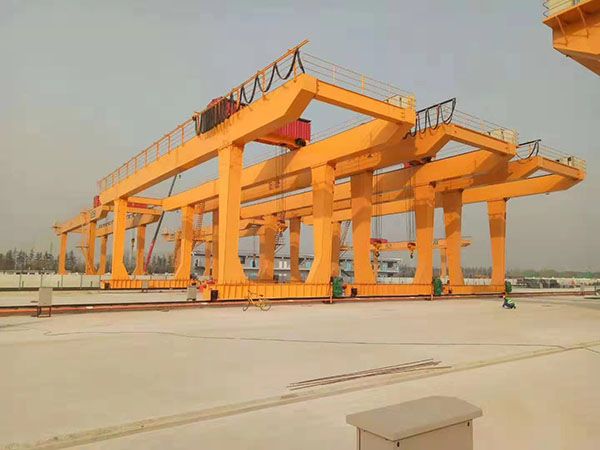
Attention should be paid to maintenance during the running in and use of new gantry cranes
The new gantry crane generally requires a break in period of about 60 hours, which is determined by the manufacturing factory based on the technical characteristics of the crane during its initial use. Anyway, the manufacturer has a warranty period, and if the machine breaks down, the manufacturer is responsible for repairing it. As a result, the machine is overloaded for a long time during the break in period, leading to frequent early failures. This not only affects the normal use of the machine and shortens its service life, but also affects the project progress due to machine damage. Therefore, the use and maintenance of the running in period of gantry cranes should be given sufficient attention. Next, let's follow the Shandong gantry crane manufacturer to learn about the precautions during the running in period of gantry cranes!
1. Operational errors are often caused by insufficient understanding of the structure and performance of gantry cranes (especially for new operators), which can easily lead to malfunctions and even mechanical accidents due to operational errors.
2. Poor lubrication is due to the small fitting clearance of newly assembled components, and due to assembly and other reasons, it is difficult to ensure the uniformity of the fitting clearance. Lubricating oil (grease) is not easy to form a uniform oil film on the friction surface to prevent wear. This reduces lubrication efficiency and causes early abnormal wear of the components. In severe cases, it can cause scratches or biting on the friction surface of the tight fit, leading to the occurrence of faults.
3. Loose newly machined and assembled components have deviations in geometric shape and fitting dimensions. In the early stages of use, due to alternating loads such as impact and vibration, as well as factors such as heat and deformation, coupled with rapid wear and tear, it is easy for previously fastened components to become loose.
4. Leakage occurs due to the looseness, vibration, and thermal effects of machine components, as well as at the sealing surfaces and pipe joints of the machine; Partial casting, processing and other defects are difficult to detect during assembly and debugging, but due to vibration and impact during operation, these defects are exposed, manifested as oil (water) leakage. Therefore, leakage is prone to occur during the running in period.
5. Due to factors such as machining, assembly, and adjustment of new machine components, the wear rate is fast. The friction surface is rough, the contact area of the mating surface is small, and the surface pressure condition is uneven. During the operation of the machine, the concave and convex parts on the surface of the parts interlock and rub against each other, and the metal debris that falls off serves as abrasives, continuing to participate in friction and accelerating the wear of the mating surfaces of the parts.
Therefore, during the running in period, it is easy to cause wear and tear of components (especially mating surfaces), and the wear rate is fast. At this point, overloading operations may lead to damage to components and early failures.
| Previous:Common knowledge that cranes must know in daily use | Next:What are the maintenance methods for bridge cranes |



 Home
Home
 Tel
Tel
 Product