



 TEL:13615481234


What are the common faults of gantry cranes?
As a manufacturer of gantry cranes in Shandong, today I would like to share with you the common faults of gantry cranes:
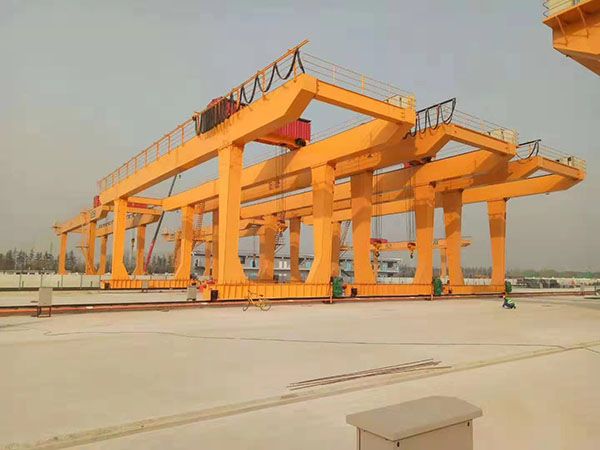
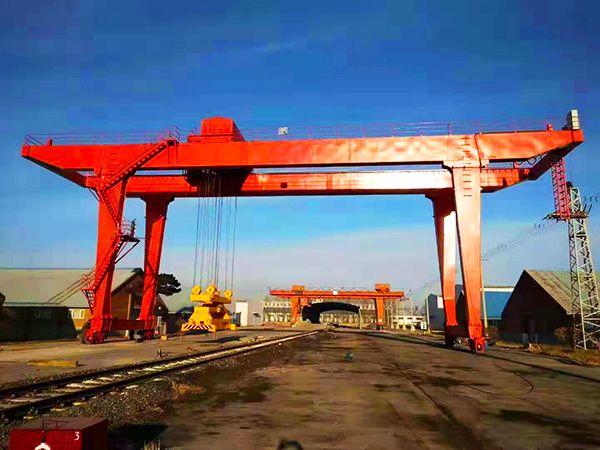
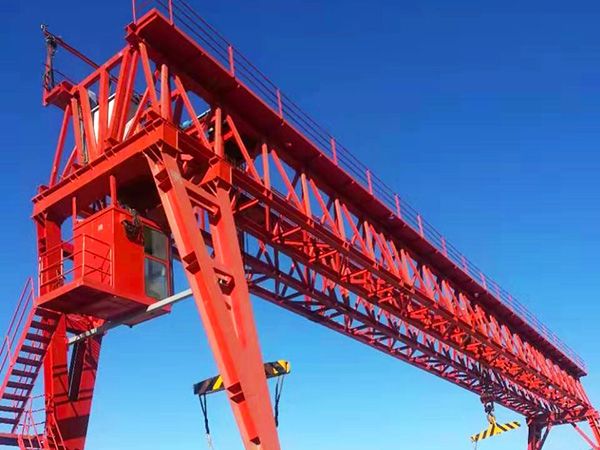
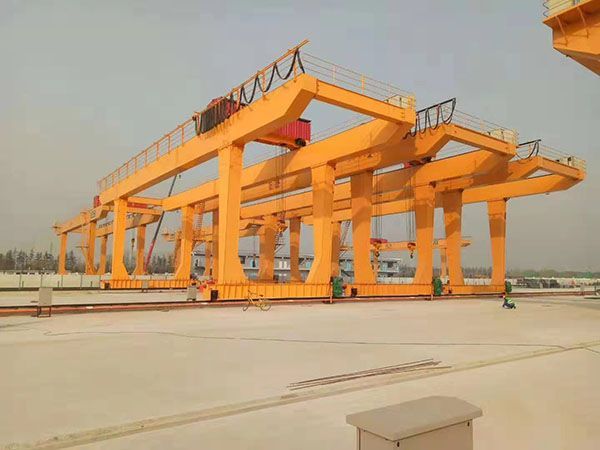
Portal crane is a common lifting equipment widely used for material lifting in docks, material yards, cargo yards and other places. During use, it is common to encounter some malfunctions. If the malfunctions are not dealt with in a timely manner, it may delay work and pose safety hazards. Therefore, in order to ensure the safe use of gantry cranes and achieve good benefits, common faults of gantry cranes should be taken seriously. The main beam of the gantry crane is equipped with support legs at both ends, which resemble a door frame and can run longitudinally along a dedicated track on the ground. It has the characteristics of strong universality, wide applicability, and high utilization rate, which can greatly improve production efficiency and reduce human labor intensity.
Common faults of gantry cranes include:
1. Gearbox gear failure
The reducer is an important transmission structure in cranes. During operation, the reduction gear can adjust the running motor to the appropriate speed and generate greater torque. However, during the transmission of torque, gears are prone to malfunctions such as gear deformation, breakage, and fatigue pitting on the gear surface. The possible causes of these faults are: after fatigue cracks appear in the gears, excessive loads during the year can lead to gear breakage; When the load is large, the frictional force generated by the transmission gear is too high, resulting in plastic deformation of the teeth; Excessive dust on the tooth surface and ineffective cleaning agents can also cause tooth wear.
2. Wheel and track malfunction
Crane rail gnawing is a common malfunction. Chewing on the rails can reduce the service life of the crane, and in severe cases may lead to safety accidents. The reason for the crane gnawing on the track may be: the installation quality of the large vehicle track is not up to standard, and the balance is not up to standard; The height difference between the two tracks is too large; The asynchronous driving and driven wheels of large vehicles can lead to rail gnawing faults.
3. Wire rope malfunction
The steel wire rope is an important load-bearing component of the crane. During operation, the stress situation of the steel wire rope is relatively complex, which can generate compressive stress, bending stress, tensile stress, etc. When passing through pulleys and drums, it will also be subjected to compressive stress and bending stress. Therefore, it is difficult to accurately calculate the stress situation of the steel wire rope. When passing through the drum and pulley, the steel wire rope will repeatedly bend, and as the number of winding times increases, the steel wire rope is prone to wear and tear. In addition, wire rope failures are also related to maintenance conditions, work intensity, and whether the diameter of the drum is appropriate.
| Previous:What should be noted for the safe use of gantry cranes | Next:What are the maintenance methods for bridge cranes |



 Home
Home
 Tel
Tel
 Product